
It got there before we did.
At first, if no one pointed it out to us, we probably wouldn’t have even noticed. I had heard some very faint whispers that the fever was there, but it seemed small, insignificant. Like it wouldn’t make much of a difference to me.
I got my first glimpse at fever-stricken people in my first week as we made our way into the small South Sudanese town. To call it a town, though, is merely to use the closest word that I otherwise find lacking in English. This town has no electric grid, no bank, no Western Union. The cell tower is run on a solar panel. The dirt road turns into sucking mud in the rain, but by this time the rain was spotty and made the way into town decently accessible.
“There they are,” Simon said, pointing to a group of women walking together. They looked normal to me: women carrying buckets on their heads, some carrying cooking pots. They stared at us as we passed by. An otherwise indistinguishable group of women—ones whose faces, postures, and cargo on their heads are easily forgotten as soon as you pass them.
But the signs were there for Simon, easily recognizable. They had the fever. And they were not the first ones with it.
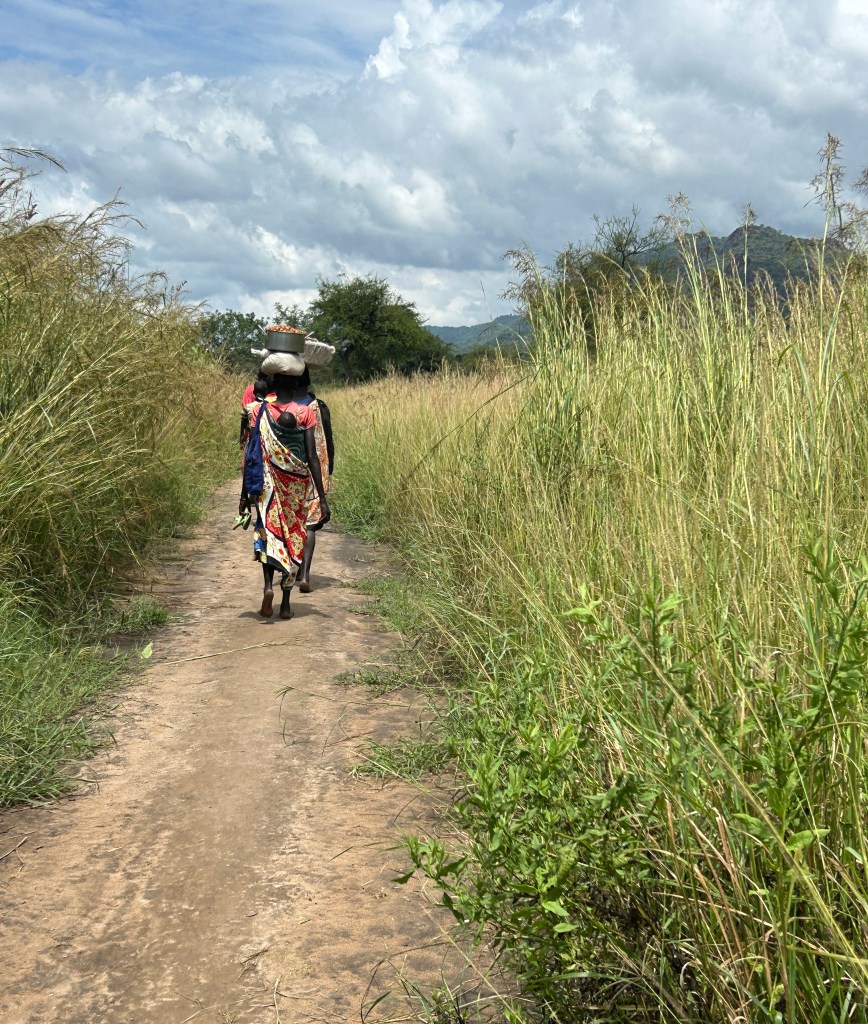
Simon told me what he saw. “Those women are on their way to the bush, to the river,” he said. “They will stay there for several days. That’s why they brought their pots and pans, to cook while they are out there.” He revealed the source of the fever: “Gold has been found, and they are looking for it.”
Gold fever had come to a tiny town in South Sudan.
I had read about the California gold rush. I remembered that, initially, local Californians were panning for gold before news spread around the world. I heard about the influx of both Americans and foreigners coming to California—the 49ers—desperate for their own flakes of gold. Flakes that would change their lives, they believed. Riches waiting to be plucked from the river, like a cure-all medicine for all their worldly ails. I heard about the merchants and shopkeepers who followed behind the 49ers to take care of their needs—and who turned out to be the most profitable. I could simply imagine the “get rich quick” scheme that sucked too many people into dreaming of easy fortune.
And now we were witnessing it right before our own eyes in 2024.
It’s easy to imagine the similarities. Being one of the most underdeveloped countries in the world, this South Sudanese town looks like it could easily be a step back in time to 1849—no paved roads, no electricity or running water, and only the most basic accessories of pots and pans to test your luck at gold. And although South Sudan is not as lawless as the California territory was before it became a state, Simon told us about how the legal system functions in his country: “What is illegal in South Sudan, is legal in South Sudan.”
After that first group of women, it didn’t take long to spot those with fever, and to see its effects on the town. It became common to see men, women, and children carrying the same supplies with them, heading in the same direction: to the river. All of them had the fever.
The town became a ghost town. Shops were closed down. Markets were empty. Even the hospital, which ran on generators and solar panels, had reduced services, because the doctors were out panning for gold.
In all my years of working in developing countries across the globe, in refugee camps and amidst disasters, I have never seen a fever as contagious as gold fever. And like with many fevers, there are inevitable symptoms.
The most obvious was the children missing out on school. Sent by their families to mine, children became and extra resource to stake out a claim on the river and look for those life-changing flakes. Some parents reasoned, “Why should I have my child sit in school, doing nothing, when they could be out making money?” It was the same battle for the value of education as before, but now it amplified parents’ suspicions that school was a time-waster.
The chief, however, strongly disagreed. In a community meeting, he sternly warned the parents on what they were doing to their children by sending them for mining. “You must keep your children in school,” he warned. “Right now, it is exam time. If you pull your children out to work for the next few weeks, they will miss their exams. And for what? You think the government is going to let you continue mining without taking control of everything? Then your child is delayed in school a full year for missing exams.” Some parents listened, but others had already determined the way for their children. After all, when the local head of education had quit his job to also hunt for gold, it sent a mixed message about the value of education.
Beside the children missing school, there were reports of other social disruptions. People had spent the money they received from gold on alcohol. Others had gotten into fights. Everyone predicted that violence would only escalate as competition grew fiercer for their spot to pan. We were only in the beginning month, and word was spreading fast.
There would be longer terms effects, too. Instead of planting crops, people were mining. In a subsistence farming setting, forgoing planting is a short-term decision with a long-term impact. There are simply no shortcuts to subsistence farming. There will not be sufficient food for harvest. People will be hungry. Food prices will increase. And while people may think that their profit from gold-mining will be enough to pay for food that they did not plant, what happens when no one planted anything and there is nothing to buy?

Just like California’s gold rush did not stay a secret amongst the Californians, the world will arrive in town, eager for their share, too. And we already saw it happen: foreigners arriving on a mission plane carrying sacks of cash, so big and heavy that it required two men to lift the sacks into the truck. Scales for weighing and measuring came with the cash. People had to travel far to sell their gold, but now someone was cutting out the market inefficiency and making it convenient to sell right in town. Whether people will receive a fair price or be ripped off only remains to be seen. The only thing that has not yet happened is government control, which is surely on its way shortly.
Time will tell what happens to the little town in South Sudan with gold in its veins. Where some see opportunity, I see warning signs in an already fragile context that is doubtful in its ability to handle an influx of cash and gold-seekers.
Regardless of what’s on the horizon, we know one thing about fevers: they spike in temperature before eventually falling. We can only hope that this gold fever will do the same—before the alternative happens.


This is a profound description of the tragedy we are in! Thank you, Leslie 🙏
I only pity our people, especially those sending their children for minding at the expense of education. Seeking riches in such a short cut is devastating.
LikeLike
You are a gifted storyteller. Thank you for sharing. I look forward to reading more.
LikeLike